
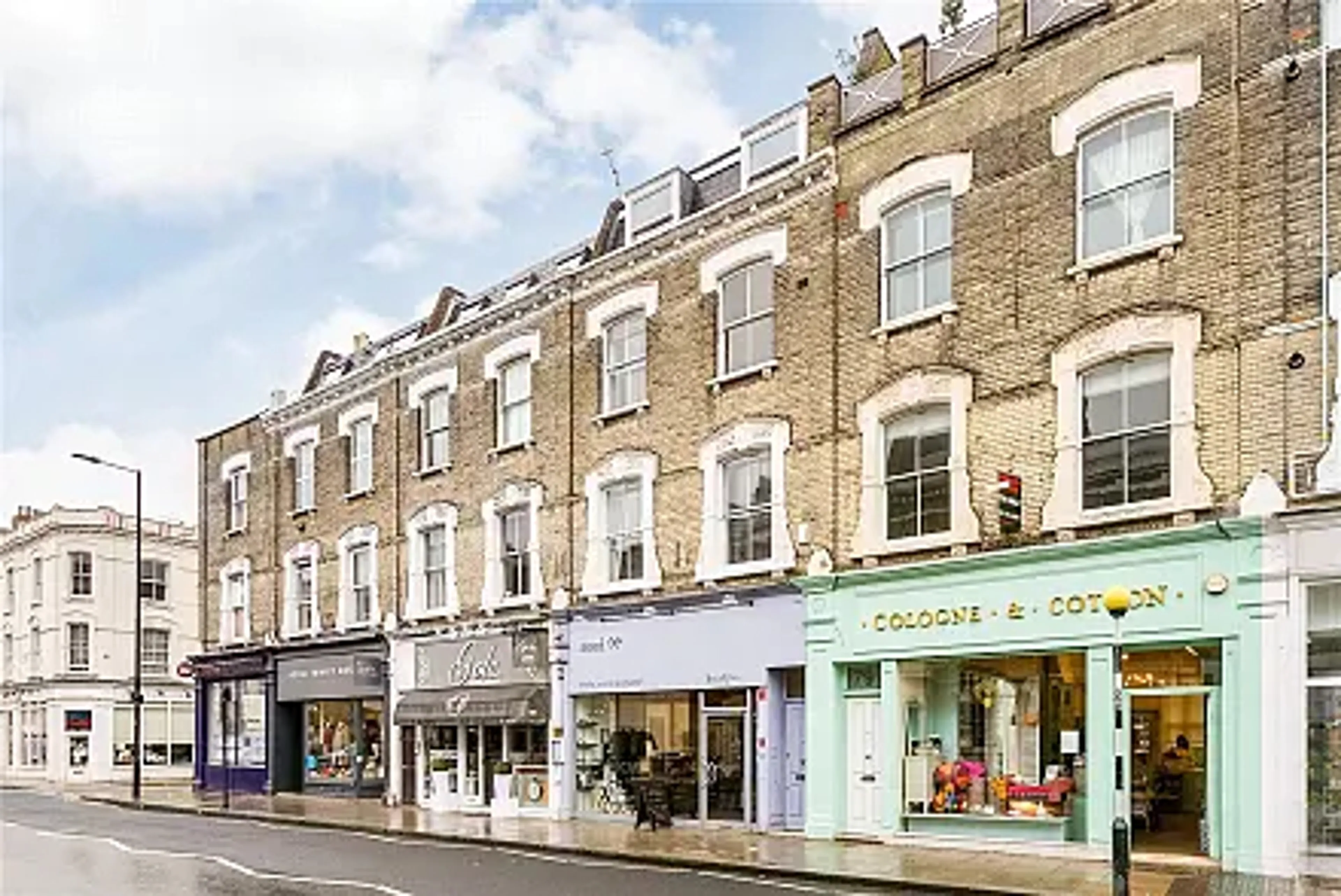
Fulham Road is one of West London’s best-known streets; a historic artery running from Putney Bridge through Fulham Broadway to Brompton Road. Roughly in parallel with the King’s Road, it connects Fulham with Chelsea and Knightsbridge and is home to a mixture of residential homes, independent shops, restaurants and major landmarks.
With that kind of pedigree, it’s perhaps little surprise that the area is popular with professionals, families and international buyers, who love its central location, village atmosphere and access to green spaces, amenities, and excellent transport links.
Fulham Road has a recordable history dating back around 5000 years, with evidence of Neolithic riverside settlements, as well as Roman bases on Fulham High Street, and with Goldhawk Road along the lines of a Roman road.
Over the centuries, it has become an important route in West London. Originally a rural track linking the riverside villages of Fulham and Chelsea, it gradually developed as London expanded westward in the 18th and 19th centuries. As the surrounding areas urbanised, the road became a key commercial and residential thoroughfare connecting communities.
Today it goes from Fulham Broadway in the west to Brompton Road near Knightsbridge in the east, passing through some of London’s most desirable neighbourhoods.
Community archaeologist, Alexis Haslam, has written that once upon a time the River Thames was much wider than it is today, and that it most likely had lots of little 'islands', which we now know as the likes of Isleworth, Brentford, Chiswick, and likely around the site we now know as Fulham Palace. Through some manmade interventions and the passage of time, this ultimately goes some way to explaining the Fulham Palace moat we see today.
The development of Fulham Road itself seems to date to around the 1300s according to different sources, existing in different guises from a mere track to its development into a more significant and desirable location. Over time, it was built up, and in the 17th-century it seemed to leap forward - larger houses appeared along the road and in the surrounding area as the region once known as Little Chelsea evolved. It was already becoming a place where prestigious properties sat alongside cottage terraces, and there's reference to at least one school on the Fulham Road in the 1700s.
During the 20th century Fulham Road became increasingly associated with retail, leisure and culture. Several notable buildings appeared, including the Art Nouveau Michelin House (built in 1911 as the UK headquarters of the Michelin tyre company). Brompton Cemetery opened in 1840, recognised for its Gothic architecture, vast catacombs, as the only Crown-owned cemetery, and as the resting place of many eminent individuals including suffragette Emmeline Pankhurst. Other major institutions like Chelsea and Westminster Hospital and the Royal Marsden Hospital have also made their home here as well.
Today Fulham Road combines historic buildings with the buzz of modern life. Antique dealers, interior design stores and boutiques sit alongside cafés, restaurants and bars, while landmarks like Stamford Bridge – home of Chelsea Football Club – bring visitors from across the world. Famous names have made it their home across the centuries, from Japanese artist Yoshio Markino, to conductor Hyam Greenbaum and his wife, harpist Sidonie Goossens. Even more have made it the place to see and be seen, especially at Maggie's, the 1980s-themed nightclub, inspired by Margaret Thatcher.

Fulham Road's appeal is rooted in the diversity of its offering, all within a comparatively small area, from a vast array of entertainment to practical amenities and green spaces, spiralling into easy access to everything you could ask for within easy reach in the surrounding area.
Although Fulham Road itself is urban, several green spaces close by give it a village feel and a sense of openness. Bishops Park is a riverside park with gardens, sports facilities and views across the Thames, while Eel Brook Common is popular with dog walkers and families. Brompton Cemetery is a historic and peaceful green space managed by The Royal Parks, close to the eastern end of Fulham Road, blessed with abundant wildlife alongside gothic monuments, and an innate sense of tranquility.
Sport is a key part of Fulham Road's identity. The most famous symbol of that is Stamford Bridge, located just off Fulham Road and home to Chelsea Football Club. The stadium has a capacity of more than 40,000 and hosts Premier League matches and major events throughout the year.
Residents also have access to nearby gyms, tennis courts, netball, football and athletics facilities at the likes of Eel Brook Common, Rocks Lane Bishops Park Tennis Centre, South Park, and Hurlingham Park Tennis Courts, The Gym Group London Fulham, Nuffield Health Fulham Fitness and Wellbeing Centre, David Lloyd Fulham, and The Hurlingham Club. Riverside running routes along the Thames Path are also a wonderful way to get outside.
Fulham Road is alive with entertainment, from local cinemas, theatres and galleries to nearby cultural institutions and museums. The area is also known for its historic architecture and landmarks, including the Art Nouveau Michelin House and Fulham Town Hall. There's a Vue cinema at Fulham Broadway, and Forum on Fulham Road itself. Fulham Library is a Grade II listed building near Parson's Green, while Fulham Palace is the nearby home of the Bishops of London. Equally, the Natural History Museum and The British Library, amongst other iconic locations, are within easy reach.
Fulham Road is known for its varied dining scene, with cafés, restaurants and pubs offering everything from casual brunch to fine dining. Perhaps most famous is Michelin House, which is home to the renowned Bibendum restaurant, now operating as Claude Bosi at Bibendum. Matt’s Cafe offers Mediterranean style dishes with a Balkan twist; the Manuka Kitchen is a hotspot for lunch, as is Amor's Artisan Cafe.
The Little Blue Door is a popular themed neighbourhood bar known for its 'house parties', themed nights, and brunch, while the Cock Tavern is a lively place to watch sport and tuck into pub grub. The road is not limited when it comes to nightlife either: Kona Kai invites you to relax or dance in equal measure; Maggie's Club is famous for its '80s vibes and celebratory atmosphere, and nearby Embargo Republica on the King's Road can be relied upon for a good night out.
Fulham Road features a mix of independent boutiques, interior design stores and specialist retailers. It's well known for antique dealers like Godson & Coles and home-furnishing shops like Farrow and Ball and Mandarin Stone, alongside lifestyle brands and small independent businesses, while nearby shopping destinations include Fulham Broadway and King’s Road.

London in its entirety is well served when it comes to healthcare options, both in terms of private and NHS practices, emergency services and routine wellbeing. Fulham Road has its own fair share of services and amenities, and the added benefit of being within easy reach of London's wider network of practitioners.
A number of NHS GP clinics serve the Fulham Road (SW6/SW10) area, with key practices including The Fulham Medical Centre, Cassidy Road Medical Centre, and Sands End Health Clinic. There are also a number of private GP practices in the local area, including Coyne Medical, Dr.Dropin Fulham, Chelsea Pharmacy Medical Centre, and The GP Surgery.
Chelsea and Westminster Hospital on Fulham Road is a major NHS teaching hospital providing emergency care, specialist clinics and maternity services. Nearby, there are also a number of hospitals, including the Royal Marsden Hospital, which specialises in cancer treatment, and the Royal Brompton Hospital, known internationally for heart and lung care.
The area surrounding Fulham Road has numerous dental practices offering both NHS and private treatment. For example, Fulham Road Dental, Chelsea and Fulham Dentist, and Fulham Dental Care are all on Fulham Road itself, while Bond Dental London and Zental Dental Earl's Court are close by.
Falling principally under the London Borough of Hammersmith and Fulham, Fulham Road is surrounded by well-regarded schools and higher-education institutions, making it attractive to families.
There is a mix of community and faith-based schools, combining both state and independent options. State primary schools include Servite RC Primary School on Fulham Road itself, while Fulham Primary School and Langford Primary School are close by. Independent primary schools include Kensington Prep School, Parsons Green Prep School, and Fulham Pre-Prep School. John Betts Primary School is a voluntary aided school managed by the Hammersmith and Fulham Education Authority, and St Stephen's Primary School is a Church of England location.
Similarly, there are a number of secondary schools close to Fulham Road, combining state and independent options, these include, but are not limited to Fulham Cross Academy, Chelsea Academy, Hurlingham Academy, The Fulham Boys School, Lady Margaret School, The London Oratory School, Sacred Heart High School, Godolphin and Latymer School, Chelsea Independent College, and Queen's Gate School.
For specialist education, Burlington House School has a Fulham location and is dedicated to supporting children with dyslexia and dyscalculia, while Fulham Cross Academy specialises in a STEM curriculum. Imperial College London and Royal College of Art are also nearby.
Fulham Road and the surrounding area is a popular place to live amongst those who seek a full life spanning entertainment and easy access to the rest of London by road, rail and public transport. The world is quite literally on your doorstep.
Fulham Road forms part of the A304 and A308 routes, connecting Fulham with central London and major roads such as the A4. Therefore, drivers can access nearby routes towards Knightsbridge, Kensington and the wider motorway for weekend escapes across the UK. As with all parts of central London, parking is limited in the area, and there are strict South Fulham Clean Air Neighbourhood (CAN) traffic restrictions designed to stop through-traffic.
Fulham Road and the surrounding area is well suited to walking and cycling, particularly as so many local amenities are located within a short distance. Walkers and cyclists also benefit from nearby routes, including those along the Thames Path and quieter residential streets.
Fulham Road is primarily served by the District Line (London Underground) at Fulham Broadway station, where you can catch regular trains towards central London and Wimbledon. You can also head to nearby London Underground stations including Parsons Green and West Brompton to access the wider area. The closest mainline station is Putney.
Various London bus routes run along Fulham Road, including routes 14 and 211, which link the area to destinations like Hammersmith, Piccadilly Circus and Battersea Power Station.
For those who fancy travelling with a waterside view, River Bus services operated by Uber Boat by Thames Clippers, run from 23 piers between Putney and Woolwich.
London is well-placed for those seeking to head overseas for work and leisure. In particular, those travelling from Fulham Road and the surrounding area enjoy easy access to Heathrow Airport via the Piccadilly Line from nearby Underground stations, or by road via the A4.