
Kensington is one of London’s most desirable places to live, famous the world over for its elegance, heritage, and the convenience of its location while still providing an escape from the buzz of the city centre. A world characterised by grand Victorian and Georgian architecture, garden squares, and cultural institutions, it's been home to the good and the great of past, present, and future.
For residents, the blend of historic charm and cosmopolitan living, excellent schools, outstanding transport links, a thriving retail and dining scene, and abundant green spaces makes it a charming place to live. Featuring a diverse range of properties, from period townhouses and mansion flats to contemporary apartments and luxury developments, it attracts families, professionals, creatives, international travellers, and those seeking a chic retirement in a thriving community.
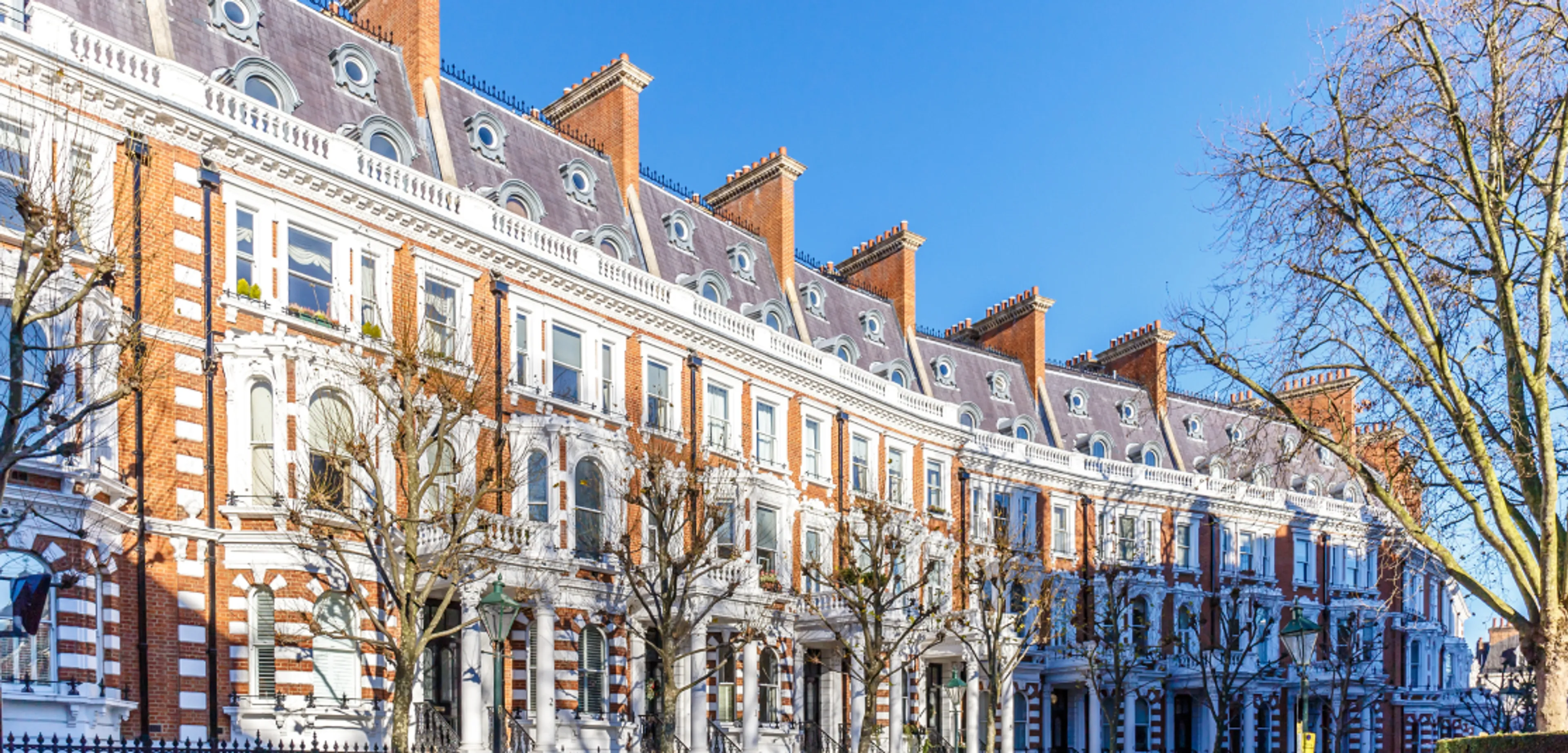
Across the centuries, Kensington has evolved from a rural village on the western edge of London into one of the capital's most prestigious areas, thanks to centuries of royal influence, architectural innovation and cultural development. The area's history is closely tied to Kensington Palace, and consequently, the area has long-attracted aristocrats, diplomats, artists and intellectuals who enjoy its refined character and charm.
A Saxon settlement
Prior to its substantive development, Kensington, like much of the area outside central London, was a quiet rural village. We can find it referred to in the Doomsday book in 1795 as 'Chenisitun'. Some have said this is a possible reference to a Saxon landowner named Cynesige and that it effectively means 'Cynesige's farm'. Over time the term became altered through the Norman tongue. The area was later awarded to the De Vere family by William the Conqueror.
A Royal residence
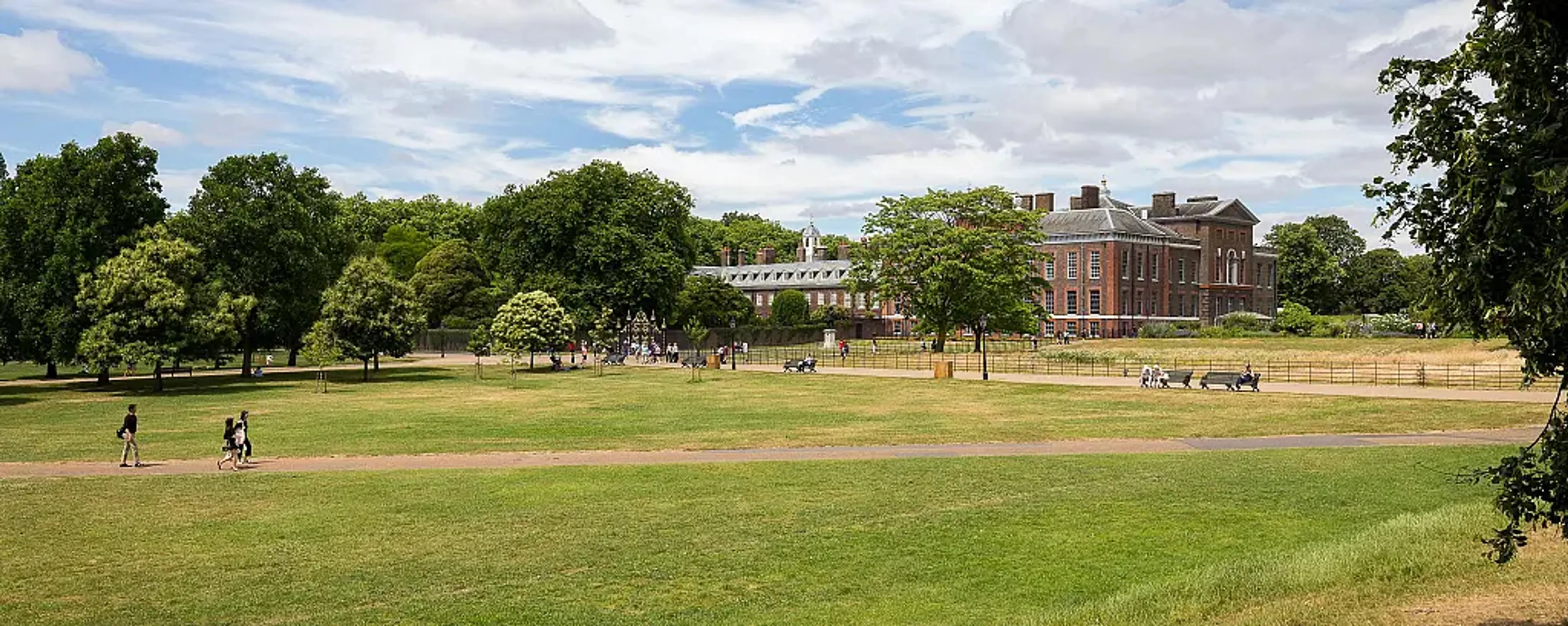
A pivotal moment came for Kensington in 1689 when King William III and Queen Mary II bought a small suburban villa called Nottingham House and transformed it into Kensington Palace with the help of Sir Christopher Wren. The palace became the main royal residence and remained at the centre of court life until Queen Victoria moved the royal family to Buckingham Palace in 1837. In the interim, it was home to many monarchs, including Queen Anne who contributed much to the gardens. In more recent years, Kensington Palace has been home to Diana, Princess of Wales, Princess Margaret, and the current Prince and Princess of Wales.
Victorian expansion
As with so much of London, the Victorian era brought great expansion and evolution. In Kensington it was no exception. While the young Queen eschewed her childhood home for Buckingham Palace as her primary residence, her beloved consort, Prince Albert, championed the development of culture and education, notably with the Great Exhibition of 1851 in Hyde Park. The proceeds of that event were used to purchase 30 acres of land in South Kensington, on Albert's instruction, this was intended to establish key cultural institutions. Ultimately, these became the Natural History Museum, the Victoria and Albert Museum, the Science Museum, Imperial College London and the Royal Albert Hall. In addition, Prince Albert was instrumental in developing Kensington Gardens, which opened to the public in 1841.
Kensington has a charming village-like feel, and within that sense of self-contained community it includes lots of local amenities, from a helpful high street to refined boutiques. A little world of its own, whether you want to go to a museum, relax in the park or do the daily shop, it's got everything you need as well as offering easy access to the wider scope of opportunities across London.
Green spaces
Green space is one of Kensington's defining features, dominated by the magnificent Kensington Gardens, one of London's most celebrated public parks. One of eight royal parks, it covers 265 acres, replete with floral walks, avenues of trees, and spectacular landmarks like the iconic Italian Gardens and the Albert Memorial. It's also home to The Diana Princess of Wales Memorial Playground.
The gardens connect seamlessly with Hyde Park, providing extensive walking, cycling and recreational opportunities, including boating and the Serpentine Galleries. Closer to Kensington High Street, Holland Park offers 54 acres of landscaped gardens, woodland walks and open lawns, and is particularly famous for its Kyoto Garden, its free-roaming peacocks, formal gardens and cultural events like open-air opera.
Sport
Kensington really celebrates the prospect of an active lifestyle for those who want to find it, whether you prefer a jog in the park, team sports, or an expansive gym. Hyde Park and Kensington Gardens provide extensive running routes, outdoor fitness facilities, tennis courts and cycling paths, while the Serpentine also supports a range of water-based activities including seasonal open-water swimming with The Serpentine Swimming Club. Private health clubs, gyms and leisure centres are widely available throughout Kensington and neighbouring Chelsea and South Kensington, including Kensington Leisure Centre, David Lloyd Kensington, Ethos Sports Centre, and Equinox Kensington.
Entertainment and culture
Few parts of London rival Kensington's cultural offering, from museums to palaces, concert halls to galleries. South Kensington is home to three of the UK's most important museums: the Natural History Museum, the Science Museum and the Victoria and Albert Museum, attracting millions of visitors and hosting exhibitions and events throughout the year. The Royal Albert Hall is legendary for its concerts, classical performances, and talks, while the Design Museum near Holland Park has become a leading centre for contemporary design and innovation. Kensington Palace is a literal jewel in the area's crown, along with Kensington Gardens, and the Serpentine Galleries in Hyde Park showcase contemporary art. Residents also enjoy easy access to the rest of London and its myriad theatres, galleries, and events.
Eating out
Kensington's dining scene ranges from neighbourhood cafés and traditional pubs to Michelin-starred restaurants. Kensington High Street, South Kensington and nearby Notting Hill offer a wide selection of choices, so residents can choose from fine dining, independent coffee shops, artisan bakeries and family-friendly restaurants. Amongst the favourites there's the Italian restaurant Jacuzzi, The Ivy Kensington Brasserie, Brother Marcus, The Lavery, Dishoom, Myrtos by Asimakis, and Lina Stores.
Shops
Kensington High Street is one of London's most popular shopping destinations, combining major high-street brands with independent boutiques and specialist retailers. Nearby South Kensington provides a more village-like shopping experience, while Knightsbridge and the King's Road are within easy reach for luxury fashion boutique, department stores and designer labels. Local food shopping is available thanks to a range of supermarkets, delicatessens and specialist food outlets as well.

Healthcare
Kensington benefits from excellent healthcare for those who live here, with access to both NHS and private medical services from GP practices, to specialist clinics and some of London's leading hospitals.
Local GP practices
You can register with local NHS and private practices, including West Kensington Surgery, South Kensington GP Clinic, The Medical Chambers Kensington, Mews Medical - Kensington, The Kensington General Practice, and Courtfield Private Practice. Nearby Notting Hill practices also include Colville Health Centre and Foreland Medical Centre.
Local hospitals
Kensington and the surrounding areas are home to some of London’s top NHS trusts and private facilities, from acute emergency care to specialist treatment. Amongst them, Chelsea and Westminster Hospital is a key provider, The Royal Marsden NHS Foundation Trust is on Fulham Road, and Royal Brompton Hospital is on Sydney Street. Cromwell Hospital is one of London's best-known private hospitals, and there's also The Princess Grace Hospital, and The Wellington Hospital.
Local dentists
Kensington has lots of NHS and private dental practices, with many offering specialist orthodontic, cosmetic and restorative treatments. There are dental clinics throughout Kensington High Street, South Kensington and neighbouring Chelsea, including The Kensington Dentist, Kensington Dental Practice, and 80 Kensington Dental Clinic.
Education
Education in Kensington is a major attraction for families with plenty of access to some of London's top state schools, prestigious independent schools and internationally recognised universities and specialist colleges.
Primary schools
Kensington is home to some of the most famous and prestigious primary schools, with notable options including Wetherby School Kensington, Kensington Primary Academy, Fox Primary School, and Bassett House School.
Secondary schools
Secondary schools in Kensington and the wider Royal Borough of Kensington and Chelsea include a number of popular state and academy schools as well as independent schools. For example, there's Queen's Gate School and Kensington Park School, Kensington Aldridge Academy, and Holland Park School.
Specialist or higher education
Kensington is particularly notable for its concentration of higher education institutions in and around the area. Imperial College London is one of the world's leading science, engineering and medical universities; and the Royal College of Art and the Royal College of Music are both internationally recognised centres of excellence. There's also the North Kensington Centre for Skills, and Kensington College of Business.
For those seeking specialist education there are a number of options including Abingdon House Prep School which provides a mainstream-style education with a specialist approach; Ormiston Kensington Queensmill Academy and First Bridge School - both for autistic children.
Transport
Kensington is spectacularly well located for travelling across London as well as enjoying national and international connectivity. There are multiple Underground stations within easy reach, extensive bus services and convenient road links that make the area particularly attractive for commuters and frequent travellers.
Driving in
Drivers in the area must ensure vehicles are Ultra Low Emission Zone (ULEZ) compliant, and there are lots of 20mph speed limits as well as narrow streets which often have cars parked on both sides. Parking in Kensington and Chelsea is heavily controlled, with payment by phone for visitor bays, as well as a number of car parks such as Hornton Street Town Hall Car Park, Q-Park Queensway, and Kensington High Street Car Park.
Walking and cycling
Walking in Kensington is one of the great pleasures of living here, whether it's for commuting or leisure. The streets are well-suited to getting around on a practical level, while a stroll in Kensington Gardens and Hyde Park is a pleasure, and favourite routes include the Kensington Gardens Spring Route, or scenic loops on the South Kensington Footways Map.
For cyclists, the area is equally appealing, with a combination of routes in the parks as well as on quieter streets. There are dedicated cycling routes connecting the area with Hyde Park, Westminster, the City and west London, and traffic-free routes in the parks as well, including the Broad Walk, Mount Walk, and the Albert Approach Road. There are Santander Cycles docking stations across Kensington, as well as services like Forest and Lime.
Travelling by train
Kensington is served by several London Underground stations, including High Street Kensington, South Kensington, Gloucester Road, Earl's Court and Kensington Olympia. These provide access to the Circle, District and Piccadilly lines, offering convenient links to the West End, the City, Heathrow Airport and major rail hubs such as Paddington, Victoria, King's Cross St Pancras and Liverpool Street.
Travelling by bus
An extensive network of Transport for London bus routes serves Kensington, making it easy to get to central London, Chelsea, Westminster, Hammersmith, Notting Hill and more. Frequent services operate throughout the day and night, such as the 9, 27, and 70 buses which run through High Street Kensington.
Travelling by boat
While Kensington itself is not located on the Thames, you can enjoy easy access to river bus services from nearby piers including Chelsea Harbour, Westminster and Embankment, where Thames Clippers services provide an alternative means of travelling across London with views of famous landmarks.
Air travel
Heathrow Airport is easily accessible thanks to the Piccadilly line, the Elizabeth line (via Paddington) and driving along the A4 and M4. Gatwick Airport can be reached via rail connections from Victoria Station, while London City Airport is also accessible on the Underground and DLR services. All of these options make Kensington particularly attractive to professionals and frequent travellers.