
Camden is one of North London's most vibrant and culturally rich areas to live, brimming with intrigue, street markets, and creative spirit.
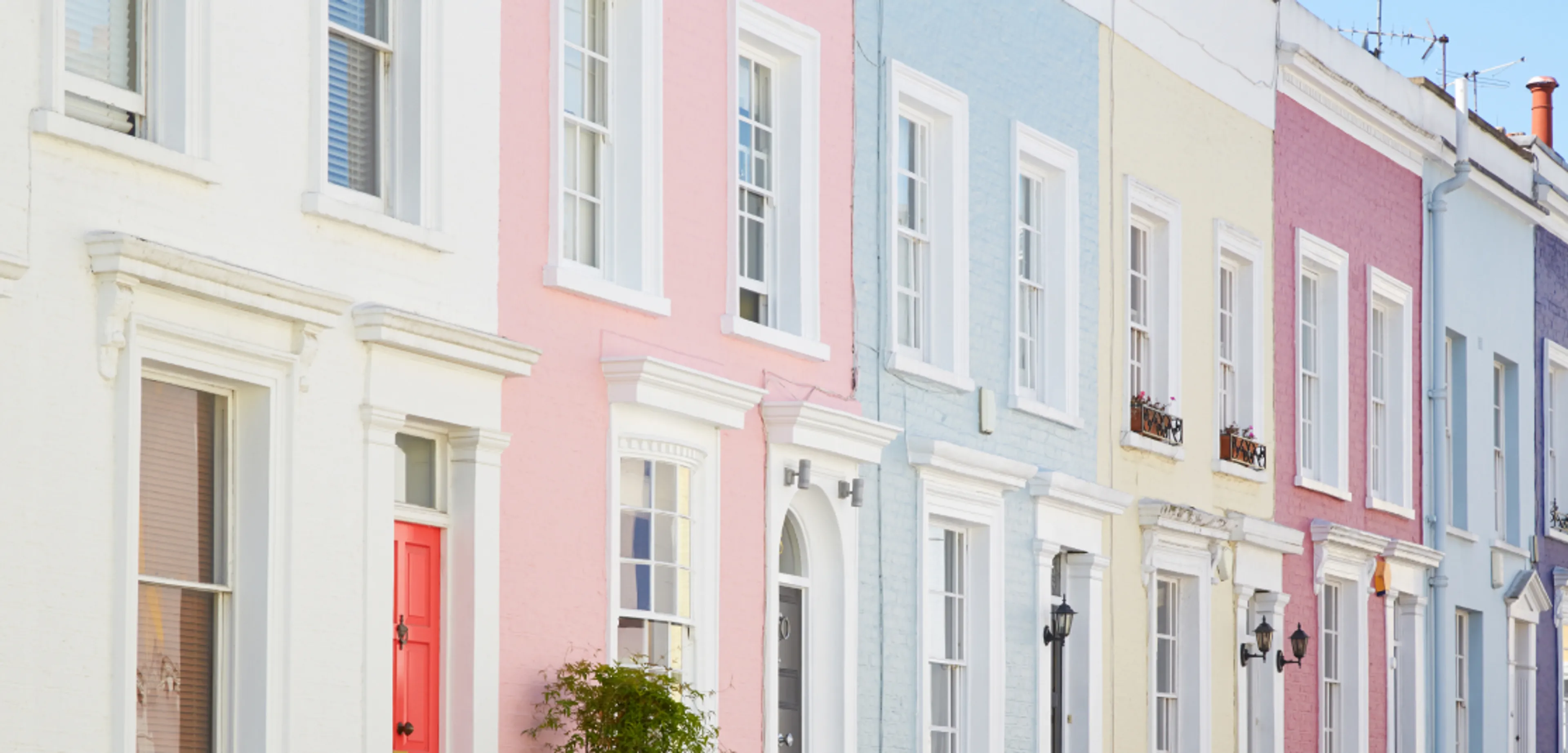
Architecturally, it's a fusion of period styles and industrial infrastructure, leafy residential streets and bustling locks along the canal. It has a strong neighbourhood vibe, excellent transport links, a broad range of independent businesses, highly regarded schools and access to some of London’s finest green spaces.
Stretching from the energy of Camden Town and Kentish Town to the refined atmosphere of Primrose Hill and Hampstead, the London Borough of Camden offers a unique mix of connectivity and community.
This blend of experiences has made it a magnet for many famous residents, from musicians like Amy Winehouse and Noel Gallagher to authors Charles Dickens and Sylvia Plath, and it continues to be an exciting place to live for professionals, creatives, and families alike.
Camden’s history
Camden’s modern identity began to take shape during the 18th and 19th centuries as London expanded, taking it from a rural settlement to a hub of industry and counterculture. In 1965 the areas of Hampstead, Holborn, and St Pancras were combined to form the London Borough of Camden, and the area was named after the first Earl Camden, Charles Pratt, who started the development of Camden Town in 1791. Today, Camden is a thriving community brimming with interest and a sense of vivacity.
Mesolithic origins
The London Borough of Camden encompasses an area of more than eight miles, including a variety of pockets, each with their own unique histories. Amongst them is Holborn, Covent Garden, Bloomsbury, King's Cross, Camden Town, Kentish Town, Primrose Hill, Hampstead, and Highgate. Across that expanse there are many stories to tell, but some of the earliest are those of Mesolithic settlements in the West Heath in Hampstead, which for centuries formed forest and rural communities.
The creation of Camden Town
It was in the 18th century that Camden really transformed. In the 1780s, Charles Pratt, the first Earl of Camden, whose moniker was derived from his ownership of Camden Place in Chislehurst, sought permission to develop the land that he owned, and by the 1790s the creation of Camden Town was well underway. As it was close to Regent's Park, it was popular amongst those with resources as a place to live away from the smoke of central London. Pratt Street still exists in Charles Pratt’s honour, just a short walk from Camden Town underground station.
Industrial innovation
The arrival of the railway at Euston in 1837, as well as the opening of the Regent’s Canal in 1820, brought change to Camden as it became a focal point for goods entering London. These hallmarks of the Industrial Revolution saw an influx of different people, and the likes of today's Camden Market and Stables Market saw their origins in the reliance on horses for trade transport, initially acting as a depot for wagons.
Counter culture in Camden
By the 1960s and 1970s, another wave of evolution had come to Camden, as once again it reinvented itself. Industrialisation had moved on, and now the architecture it left behind formed the perfect backdrop to a creative epicentre, inviting a diverse community, cultural fusion, and the rise of the punk rock movement at local venues like The Roundhouse. That rebellious, creative spirit is still at the heart of Camden today.

Camden offers a variety of amenities, from independent cafés and restaurants to theatres, music venues and markets. Those who live here benefit from a lively atmosphere combined with plentiful local services and easy access to central London.
Green spaces
One of Camden’s greatest strengths is its access to the great outdoors, with over 76 parks and more than 300 green spaces across the borough. Hampstead Heath is one of London’s largest and most celebrated parks, replete with woodland walks, swimming ponds, sports facilities and panoramic city views. Regent's Park famously provides landscaped gardens, sports pitches and open parkland, while Primrose Hill is known for its views across London, and Lincoln's Inn Fields is the largest public square in the city. There are also smaller local parks including Waterlow Park, and Adelaide Road Nature Reserve, popular for its summer meadow, pond, and small woodland.
Sport
Camden is a community-focused area, so despite its highly urban nature, it offers a wide range of sporting facilities and outdoor activities. Hampstead Heath is home to running trails, tennis courts, football pitches and outdoor swimming ponds, while Regent’s Park contains sports facilities including football, cricket and rugby pitches, and there's Parliament Hill Fields Tennis Courts as well as Cantelowes Pitch. There are lots of private gyms, yoga studios and leisure centres throughout the borough, while leisure centres include the likes of Kentish Town Sports Centre, Swiss Cottage Leisure Centre, Pancras Square Leisure, Oasis Sports Centre in Holborn, and Talacre Community Sports Centre.
Entertainment and culture
Camden has long been recognised as one of London’s cultural centres. Camden Market attracts visitors from around the world with its independent traders, food stalls and creative retail spaces. The borough is well known for its music and arts scene, with hotspots including the likes of Roundhouse and Electric Ballroom, which host concerts, theatre productions and cultural events throughout the year. Independent cinemas, comedy venues, galleries and bookshops all contribute to Camden’s creative atmosphere, with favourite locations including KOKO, The Jazz Cafe, The Dublin Castle, and the Hawley Arms.
Eating out
With its vibrant mix of cultures and artisan proprietors, Camden is a culinary gem, with an impressive variety of restaurants, cafés and gastropubs reflecting the area's international character. Popular locations include La Patagonia for Argentine cuisine, and Rosella for Italian fare. For brunch, residents regularly visit Kossoffs and Bread By Bike, both known for specialty coffee and relaxed atmospheres, while Camden’s pub scene is equally varied, ranging from traditional gastropubs like The Parakeet and The Grafton to lively community favourites including the Lion and Unicorn and The Camden Head.
Shops
Camden combines a variety of independent retail with everyday convenience with high streets throughout Kentish Town and Camden Town offering cafés, bookshops, boutiques, supermarkets and specialist food stores. There's easy access to major supermarkets including Sainsbury’s and Iceland, alongside independent grocers, organic food shops and local markets. Camden Market remains one of London’s best-known shopping destinations, particularly for fashion, crafts and international street food.

Healthcare
Camden benefits from excellent healthcare provision, with a wide range of GP practices, dental clinics and specialist hospitals located nearby, as well as offering easy access to world-leading institutions across London.
Local GP practices
Those who live in Camden can register with a number of well-regarded GP surgeries across the borough, including more than 50 practices near Camden Town itself. Practices provide routine healthcare, family medicine and specialist referral services, supported by a strong NHS infrastructure across North London. Clinics include Camden Health Improvement Practice, James Wigg GP Practice, and the Prince of Wales Medical Centre.
Local hospitals
Camden is served by two major NHS hospitals with full A&E departments: University College Hospital in Bloomsbury and the Royal Free Hospital in Hampstead - both of which are teaching hospitals. For private hospitals, residents also have access to several leading independent providers in central and north London, including facilities around Harley Street, Fitzrovia and St John’s Wood, like The Wellington Hospital, St John & St Elizabeth Hospital, and The Princess Grace Hospital. Specialist hospitals close by include St Pancras Hospital for psychiatric care, geriatric medicine, and rehabilitation services, and the National Hospital for Neurology and Neurosurgery.
Local dentists
Camden has a significant number of NHS and private dental practices offering general dentistry, orthodontics and specialist treatment. Practices are widely available throughout Kentish Town, Camden Town and nearby Hampstead. For example, Holland Park Dental Centre, Camden High Street Dental Practice, Camden Dental Centre, and Ivy House Dental Practice Camden.
Education
Camden is popular with families because of its education provision, including well-performing state and independent schools, as well as internationally recognised higher education institutions.
Primary schools
Popular primary schools in the Camden area include Eleanor Palmer Primary School, Kentish Town Church of England Primary School, Torriano Primary School, St Patrick's Catholic Primary School and Christ Church Primary School.
Secondary schools
There's a large number of secondary schools in and around Camden, all with their own merits. They include, but are not limited to Parliament Hill School, William Ellis School, The Camden School for Girls, The UCL Academy, Hampstead School and Acland Burghley School. Independent schools in the local area include a range of preparatory and senior schools across Hampstead, Regent’s Park and central London, such as Broadhurst School, City Junior School, Devonshire House Preparatory School and Guildhouse School.
Specialist or higher education
Camden is home to several internationally recognised higher educational institutions, and is extremely close to many others. In the borough itself you will find University College London as well as the Royal Veterinary College, which is one of the world’s leading veterinary schools.
There are three dedicated special education providers in the area, including Frank Barnes for deaf children; Harmood School for social, emotional and mental health needs; and Swiss Cottage School for those with severe and profound learning difficulties including autism.
Transport
One of the most appealing aspects of living in Camden is that it benefits from some of London’s strongest transport connections, making it highly convenient for commuters. Residents have access to Underground, Overground, National Rail and international rail services, alongside extensive bus and cycling networks.
Driving in
Camden is well connected to major London routes including the A1, Euston Road and the North Circular. Like much of central London, traffic can be busy, especially during peak hours, and parking restrictions apply in many areas. It is within the Ultra Low Emission Zone (ULEZ), and in some parts Congestion Charges apply.
Walking and cycling
Camden encourages walking, with many areas connected by pretty residential streets and canal-side routes. The cycling infrastructure is under continuous development and there are existing dedicated cycle lanes, like Cycleway 6 (C6), linking Camden to King’s Cross, the West End and surrounding areas. The Regent’s Canal towpath is particularly popular with cyclists and walkers.
Travelling by train
Camden is exceptionally well connected by rail. London Underground services include the Northern, Piccadilly, Victoria, Circle, Metropolitan and Hammersmith & City lines through stations including Camden Town, Kentish Town and King’s Cross St Pancras. London Overground services are available from Camden Road and Kentish Town West, providing connectivity across London, and National Rail and Thameslink services are available from Kentish Town, offering direct routes to central London, Brighton, Bedford and Luton. Nearby King’s Cross St Pancras and Euston stations offer regional, national and international rail connections.
Travelling by bus
Camden has an extensive bus network for easy transport across London day and night to the West End, the City, Islington, Hampstead and more. Key routes include the 24, 29, 134, 214, and 274.
Travelling by boat
The Regent’s Canal runs through Camden and offers both scenic walking routes and leisure boat trips. Canal services and routes run by the London Waterbus Company connect Camden Lock with Little Venice and other parts of London’s canal network, offering a beautiful way to spend time during warmer months.
Air travel
Camden’s central location makes travelling to major airports in the surrounding area relatively straightforward. Heathrow Airport can be reached directly via the Piccadilly Line, while Thameslink services offer convenient access to Luton Airport and Gatwick Airport from central London. For international rail travel, nearby St Pancras International offers Eurostar services to destinations across Europe.